Yard drainage contractor matching — Atlanta metro
Yard Drainage Solutions in Atlanta, GA
Standing water, soggy turf and runoff crossing the yard are usually symptoms of the same thing: surface water with nowhere to go. A yard drainage plan gives it a route.
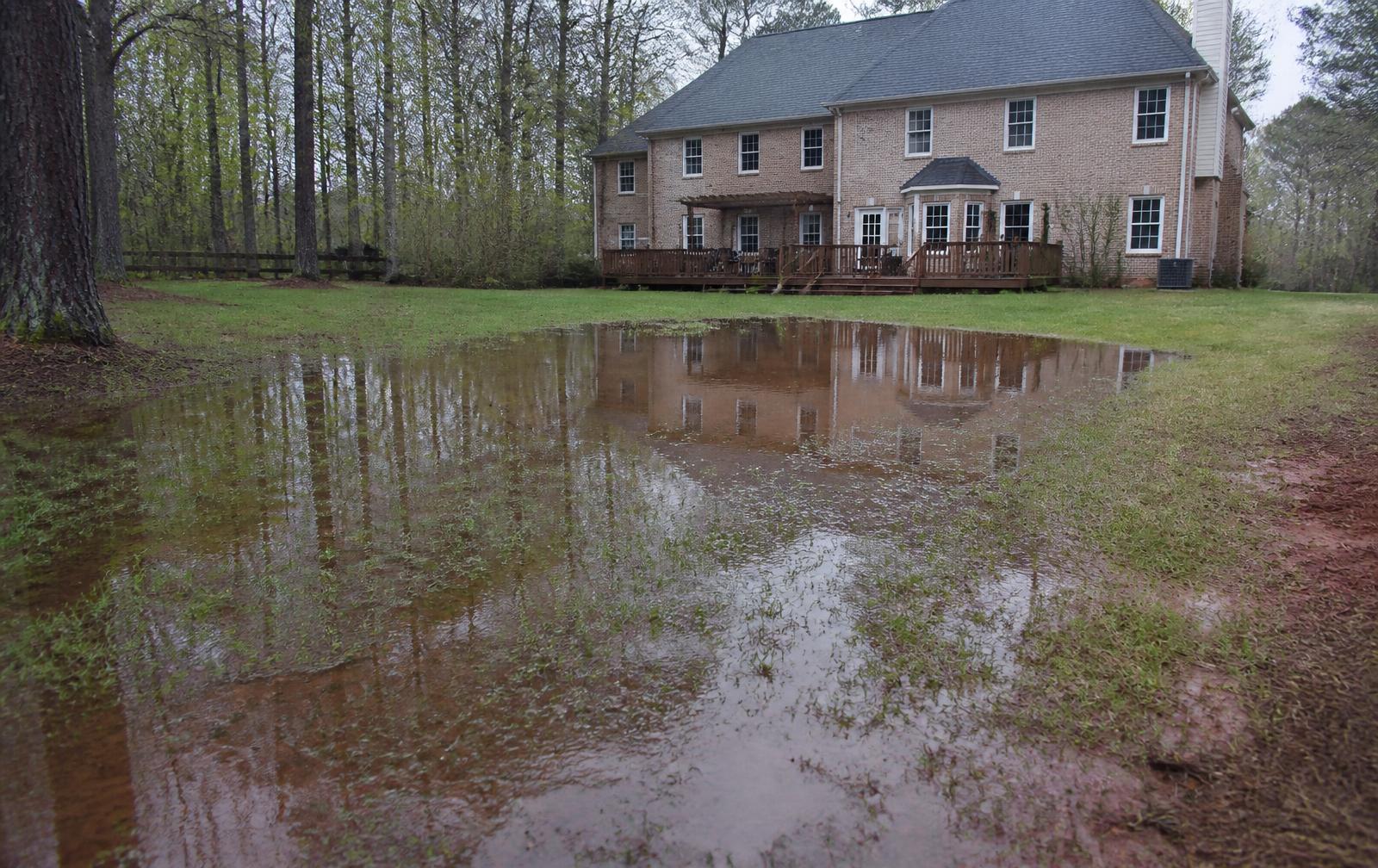
Yard drainage is the broad category that covers every method of moving surface water and shallow subsurface water off a residential lot in a controlled way. Depending on the property, that can mean a French drain, a network of catch basins and solid pipe, buried downspout lines, regrading a low area, a swale, or some combination of all of them.
Most Atlanta-area yards that hold water are not failing for one single reason. A back corner that stays wet for days often has three contributors at once: heavy clay subsoil that infiltrates slowly, roof water discharged at the foundation, and a grade that slopes toward the low point instead of away from it. A good drainage plan starts by identifying which of those is doing the most damage.
Signs your yard needs a drainage plan
- Puddles that sit for a day or more after rain stops
- Spongy, muddy turf that ruts under a mower or footsteps
- Moss, algae or thinning grass in a consistent low area
- Mulch and topsoil washing out of beds and across walkways
- Water sheeting across the lawn from a neighboring uphill lot
- Mosquito activity concentrated around the same wet spot each season
When yard drainage work makes sense
- Water collects in a defined low area and has no outlet at a lower elevation
- The lawn stays saturated long enough to kill turf or prevent mowing
- Runoff volume is high because of roof area, driveway area or an uphill property
- You are planning landscaping, sod, a patio or a play area and want the water managed first
How a yard drainage system typically works
1. Read the water, not just the yard
Elevations are checked to find where water enters the property, where it collects, and where a discharge point can realistically be established. Without a viable outlet at a lower elevation, no drainage system works well.
2. Intercept the water
Catch basins collect ponding at low points, a perforated pipe in a gravel trench collects saturated shallow groundwater, and channel drains catch sheet flow off hard surfaces.
3. Convey it in solid pipe
Collected water is carried in smooth-wall solid pipe with continuous fall. Solid pipe between collection points keeps water moving instead of releasing it back into wet soil along the way.
4. Discharge and restore
Water is released to daylight, a pop-up emitter or an approved discharge point away from structures and off neighboring property. Trenches are backfilled, compacted and the surface is restored.
What makes Atlanta yards different
Metro Atlanta gets substantial annual rainfall, often in intense bursts. The problem is rarely total volume over a year — it is how much falls in an hour and where that water lands.
Below the topsoil, much of the region sits on dense red clay. Clay holds water and accepts it slowly, so infiltration-only ideas such as adding sand or aerating rarely solve a real ponding problem. Water usually has to be collected and piped somewhere else.
Many neighborhoods were also cut into rolling terrain, which leaves homes on sloped lots with backyards below the house pad. Those lots collect water from above and need a designed route out.
Typical considerations
- Discharge point: gravity systems need somewhere lower to release water legally and safely
- Utility locates before any excavation, including irrigation and invisible fence lines
- Tree roots, which affect trench routing and depth
- Lawn restoration after excavation — sod, seed or straw
- Access for equipment through gates and between structures
- Whether the yard needs collection, regrading, or both
Get a free estimate for yard drainage
Submit your property details and project description through the form. No phone calls required to start.
Questions
Yard Drainage — Frequently Asked Questions
Will adding topsoil or sand fix standing water in an Atlanta yard?
Rarely on its own. Filling a low spot without giving the water an exit usually moves the puddle a few feet. Sand mixed into clay does not create meaningful drainage either. Water generally needs to be collected and piped to a lower discharge point.
How long does a yard drainage installation take?
Small single-run projects are often completed in a day. Larger systems with multiple basins, long pipe runs or regrading commonly take several days, and weather can extend the schedule because saturated clay is difficult to excavate cleanly.
Do I need a permit for yard drainage in the Atlanta metro?
It depends on the jurisdiction and scope. Simple surface drainage on a single lot often does not, while work involving stream buffers, floodplains, retaining structures or significant grading may. Local requirements should be confirmed for your specific address before work begins.
Can drainage work be done in winter?
Yes. Atlanta winters are wet rather than deeply frozen, and dormant turf recovers well in spring. The main constraint is soil saturation on the days immediately after heavy rain.