Water at the house — Atlanta metro
Foundation Drainage Solutions in Atlanta, GA
Water collecting against a foundation is the drainage problem worth solving first. Almost all of it arrives from the roof, the grade, or uphill soil.
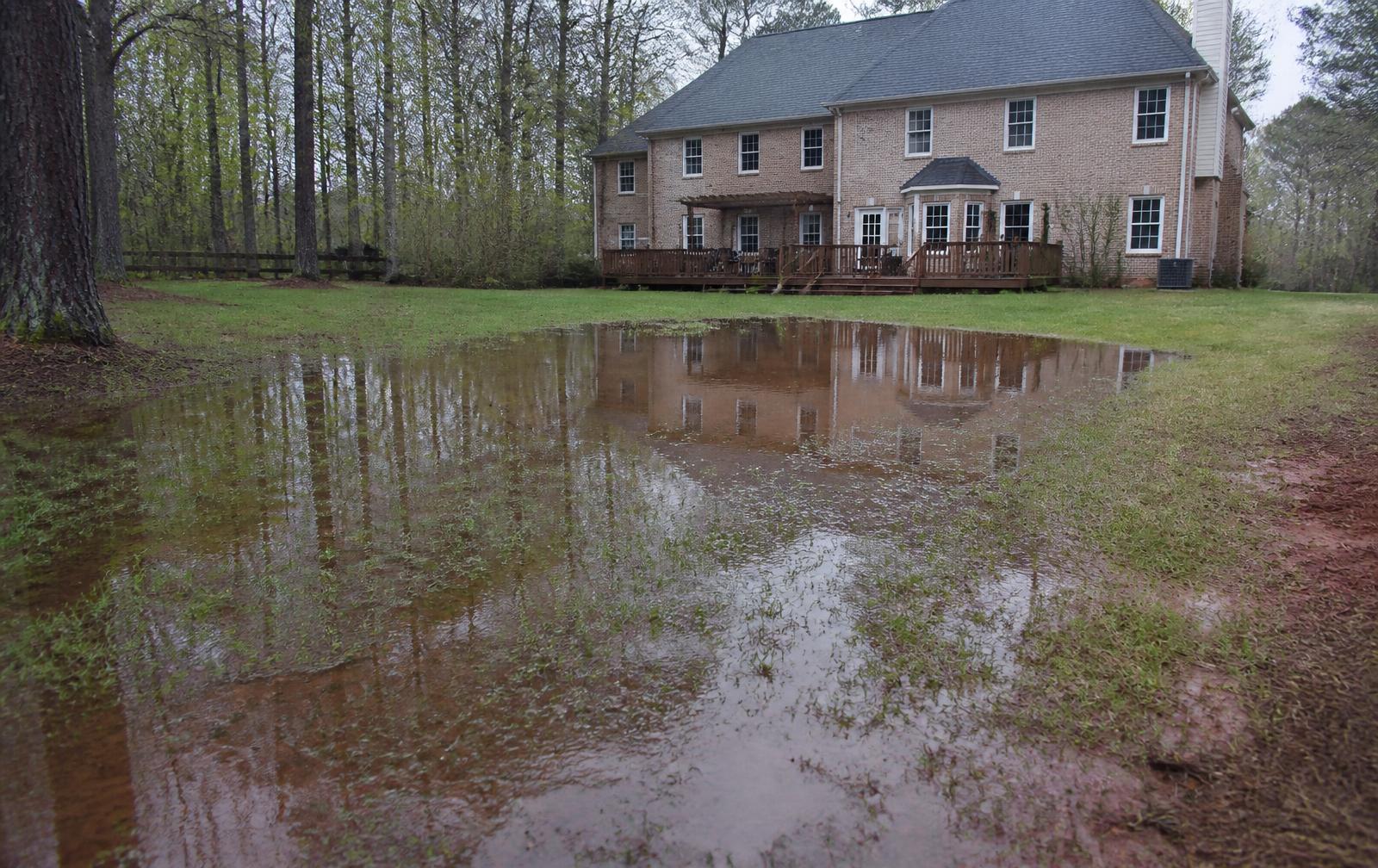
Foundation drainage is exterior water management: keeping stormwater from collecting against basement walls, crawl space walls and slab edges. It is not waterproofing and not structural repair — it addresses the water source rather than the wall.
On most Atlanta-area homes, three exterior sources account for the majority of foundation moisture: roof discharge released beside the house, negative grade from settled backfill, and subsurface water moving downhill toward the structure. Each has a distinct fix, and they are frequently present together.
Signs water is reaching the foundation
- Puddles standing against the foundation wall after rain
- Damp or musty crawl space, or standing water under the house
- Efflorescence — white mineral residue — on interior basement walls
- Soil pulled away from or settled along the foundation line
- Water seeping in at the wall-floor joint after heavy storms
- Mulch and soil washing against the siding or brick
When exterior foundation drainage is appropriate
- Water is visibly collecting at or near the wall during storms
- Roof runoff discharges within a few feet of the foundation
- The ground slopes toward the house across any part of the perimeter
- An uphill slope drives subsurface water toward the structure
How foundation drainage typically works
1. Remove the roof contribution
Downspouts are collected and piped well away from the house. This is usually the largest and cheapest single improvement.
2. Restore positive grade
The soil within the first several feet of the wall is reshaped to fall away, correcting the settlement that developed after construction.
3. Intercept upslope water
Where water travels through soil toward the house, a curtain or interceptor drain uphill of the wall collects it and routes it around the structure.
4. Discharge with fall
All collected water is carried to a discharge point at a lower elevation and away from both your foundation and adjacent properties.
Foundations and Georgia clay
Clay backfill around foundations settles over time and holds moisture against the wall. That is why a home that stayed dry for years can begin showing crawl space moisture without anything obvious having changed.
Many metro Atlanta homes also have walk-out basements built into a slope, which means one elevation of the house has soil pressing against it while water moves downhill from above. Exterior interception uphill of that wall is often the practical answer.
Exterior drainage addresses water in the soil. If there is active structural movement or interior water intrusion, that should be evaluated by an appropriate specialist — drainage work manages the water, not the structure.
Typical considerations
- Length of foundation perimeter needing attention
- Depth of excavation near the wall and access for equipment
- Existing landscaping, walkways, patios and decks in the work zone
- Whether the priority is grading, roof water, subsurface interception or all three
- A viable discharge elevation away from the structure
- Coordination with any separate structural or waterproofing work
Get a free estimate for foundation drainage
Submit your property details and project description through the form. No phone calls required to start.
Questions
Foundation Drainage — Frequently Asked Questions
Can drainage work help protect a foundation?
Managing exterior water reduces how much water collects against foundation walls, which is a recognized part of keeping basements and crawl spaces drier. It does not repair or replace structural work where that is needed.
What should be fixed first — grading or downspouts?
Buried downspouts usually deliver the largest improvement per dollar because roof water is concentrated and easy to relocate. Grading is commonly the next step.
Is exterior drainage the same as waterproofing?
No. Exterior drainage keeps water from accumulating in the soil against the wall. Waterproofing treats the wall itself. They are complementary, and exterior work is often the first thing to address.
Why is my crawl space wet when the yard looks dry?
Subsurface water can move through clay along the soil-foundation interface without obvious surface ponding, especially on sloped lots. An interceptor drain uphill of the wall is a common response.