Roof runoff management — Atlanta metro
Buried Downspout Drainage in Atlanta, GA
A roof concentrates rain into a handful of discharge points. Burying downspout lines takes that volume away from the foundation instead of releasing it there.
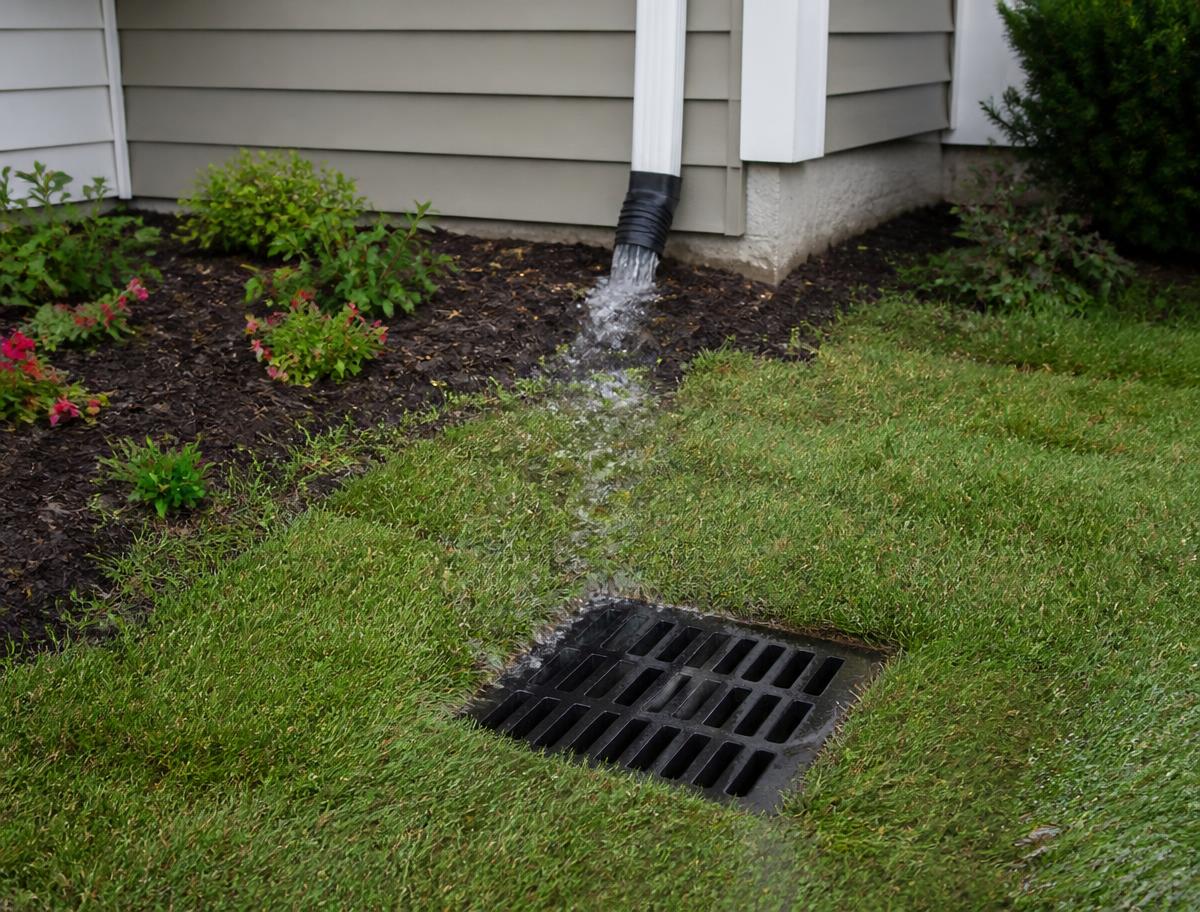
Buried downspout drainage connects gutter downspouts to underground pipe that carries roof water to a discharge point well away from the house. It is one of the highest-value drainage improvements on a typical Atlanta lot, because roof runoff is both large in volume and easy to redirect.
A moderate storm on an average roof produces a substantial quantity of water, and short splash blocks or above-ground extensions typically release it within a few feet of the foundation — exactly where you least want it.
Signs roof runoff is the problem
- Erosion craters, splash marks or washed-out mulch beneath downspouts
- Wet soil or a persistent puddle at one corner of the house
- Water in the crawl space or dampness on a basement wall near a downspout
- Above-ground extensions that get moved, mowed over or disconnected
- Muddy tracks running from the downspout across the lawn
When to bury downspout lines
- Downspouts discharge within a few feet of the foundation
- Surface extensions are unsightly, tripped over, or repeatedly displaced
- Roof water is feeding the wettest area of the yard
- You are already installing yard drainage and can tie the roof lines into the same network
How buried downspout drainage typically works
1. Collect at the downspout
Each downspout is fitted with an adapter or a small catch basin at grade so debris can be captured and cleaned out.
2. Run solid pipe
Smooth-wall solid pipe — not perforated pipe — carries the roof water. Perforations would release it back into the soil along the route.
3. Maintain continuous fall
The line runs downhill without sags to keep flow velocity high enough to clear leaf grit and shingle granules.
4. Discharge safely
The line ends at daylight on a lower part of the lot or at a pop-up emitter that opens under flow and closes afterward, positioned so water does not run onto a neighboring property.
Roof water on Georgia clay
Because clay accepts water slowly, roof discharge tends to stay near the surface and travel along the ground. Water released at the foundation therefore sits against it rather than soaking straight down.
Pine straw and hardwood litter are also part of the picture in most metro Atlanta neighborhoods. Buried lines need a way to keep needles and grit out — a basin with a sump or an accessible cleanout — or fine debris will accumulate at low points.
Typical considerations
- Number of downspouts being buried and total pipe length
- Pipe diameter relative to roof area served
- Available fall from the downspout to a usable discharge point
- Emitter versus daylight discharge, based on lot elevation
- Routing around walkways, driveways and mature roots
- Cleanouts for future maintenance
Get a free estimate for downspout drainage
Submit your property details and project description through the form. No phone calls required to start.
Questions
Downspout Drainage — Frequently Asked Questions
Can downspouts be buried underground in Georgia?
Yes. Buried downspout lines are common on residential lots throughout metro Atlanta. The main requirements are solid pipe, continuous fall, and a discharge point that does not create a problem for the house or the neighbor.
Should buried downspout lines use perforated pipe?
No. Roof water should be conveyed in solid pipe. Perforated pipe leaks the runoff into the soil along the route, which can create a new wet area partway through the yard.
What is a pop-up emitter?
It is a hinged fitting at the end of a buried line, set near grade. Flow pressure lifts the lid so water is released, and it closes when flow stops, which keeps debris and animals out of the pipe.
Will burying downspouts fix water in my crawl space?
It often helps significantly, because roof discharge is frequently the largest single water source at the foundation. Whether it is sufficient depends on grading and subsurface water as well.