Catch basins & yard drains — Atlanta metro
Catch Basin Installation in Atlanta, GA
A catch basin is a grated box set at a low point. It captures surface water, drops sediment into a sump, and sends the rest into pipe.
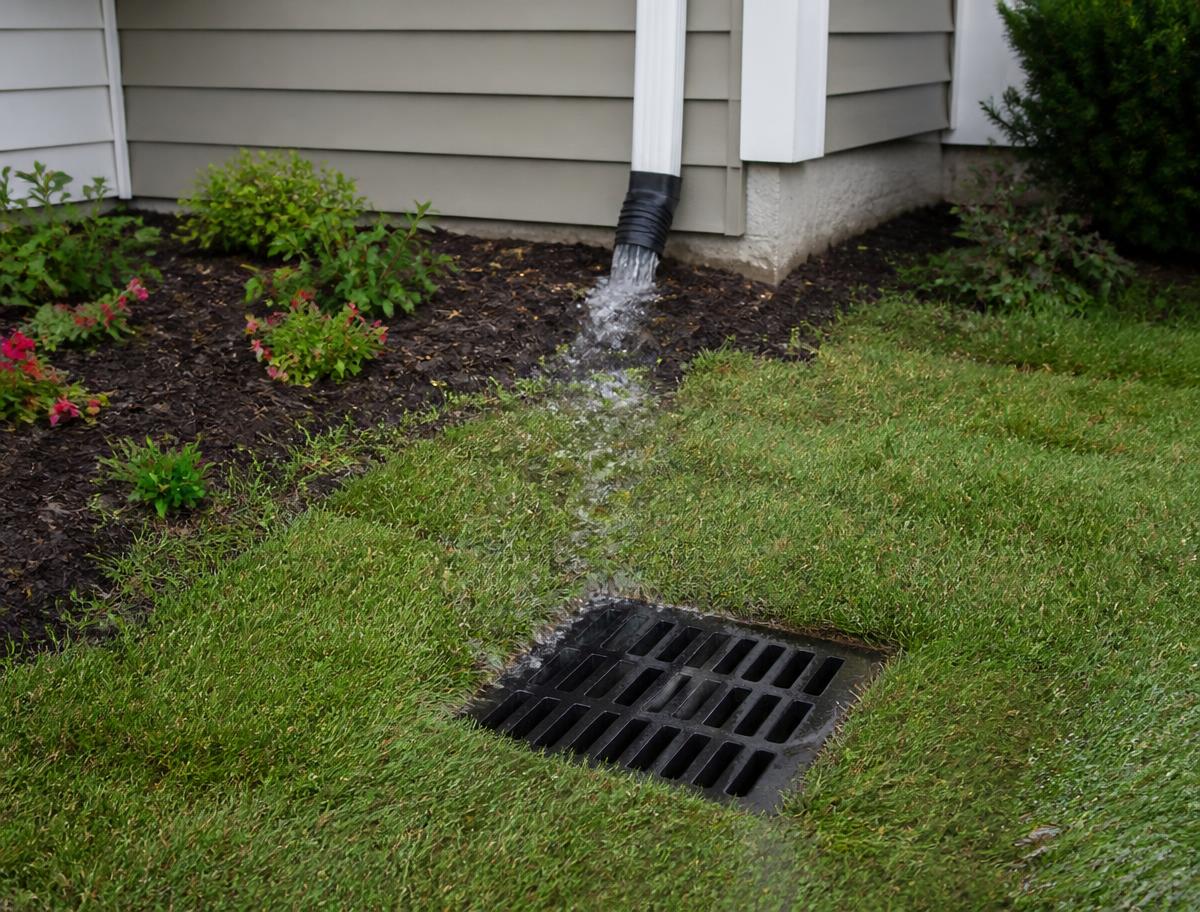
Catch basins are the workhorse of residential yard drainage. Where a puddle forms in a repeatable spot, a basin gives that water an inlet, and solid pipe carries it to a discharge point at a lower elevation.
The sump below the outlet is what separates a basin from a plain grate: silt, mulch and grass clippings settle there instead of moving into the pipe, and the basin can be cleaned out from the surface in minutes.
Where catch basins usually go
- A recurring puddle in the same low spot in the lawn
- Water collecting at the bottom of a slope or against a patio edge
- Ponding where two downspouts discharge into the same area
- Standing water in a side yard between houses
- Low areas beside driveways, walkways and retaining walls
When a catch basin is the right solution
- The water problem is surface ponding at a defined location
- A gravity route exists to a lower discharge point
- Sediment load is high enough that a sump is worth having
- You want an access point for cleaning and future maintenance
How catch basin installation typically works
1. Locate the true low point
The basin is set where water actually collects, verified by elevation rather than by memory of where it looked worst.
2. Set the basin below grade
The grate is installed flush with or slightly below surrounding turf so water enters rather than skirting around it.
3. Connect solid pipe with fall
Smooth-wall solid pipe leaves the basin above the sump and runs continuously downhill to the outlet.
4. Backfill, compact and restore
The excavation is compacted so the basin does not settle, and turf around the grate is restored.
Catch basins in Atlanta yards
Because clay soils absorb slowly, a substantial share of Atlanta yard water stays on the surface and travels. Basins intercept that flow at the point it collects, which makes them effective and comparatively affordable in this region.
Sediment is also a factor: red clay silt, pine straw and hardwood leaf litter move with runoff year-round. Basins with real sumps and removable grates make it practical to clear that material out before it reaches the pipe.
Typical considerations
- Basin size and grate type based on expected flow and traffic over the grate
- Number of basins needed across the property
- Total pipe length between basins and the discharge point
- Available fall — a basin without an outlet below it becomes a holding tank
- Compaction so the grate does not settle below or above grade over time
Get a free estimate for catch basin installation
Submit your property details and project description through the form. No phone calls required to start.
Questions
Catch Basin Installation — Frequently Asked Questions
What is the difference between a catch basin and a French drain?
A catch basin collects water from the surface at one point. A French drain collects water from the soil along a line. Many Atlanta yards use both, connected into a single pipe run to one discharge point.
How often should a yard catch basin be cleaned?
A visual check a couple of times a year is reasonable, plus after heavy leaf fall. Lifting the grate and removing accumulated silt and debris from the sump is usually a short task.
Can a catch basin be installed in a lawn where it will be mowed over?
Yes. Grates are set flush with the turf so mowers pass over them. Correct compaction during backfill is what keeps that flush relationship over time.
Will one catch basin fix my whole backyard?
Only if the yard has a single low point and a viable outlet. Larger or multi-low-point yards typically need several basins tied together, sometimes with regrading so water actually reaches the inlets.