Drainage repair — Atlanta metro
Drainage System Repair in Atlanta, GA
Existing drains stop working for a small number of predictable reasons. Finding which one applies to your yard is most of the job.
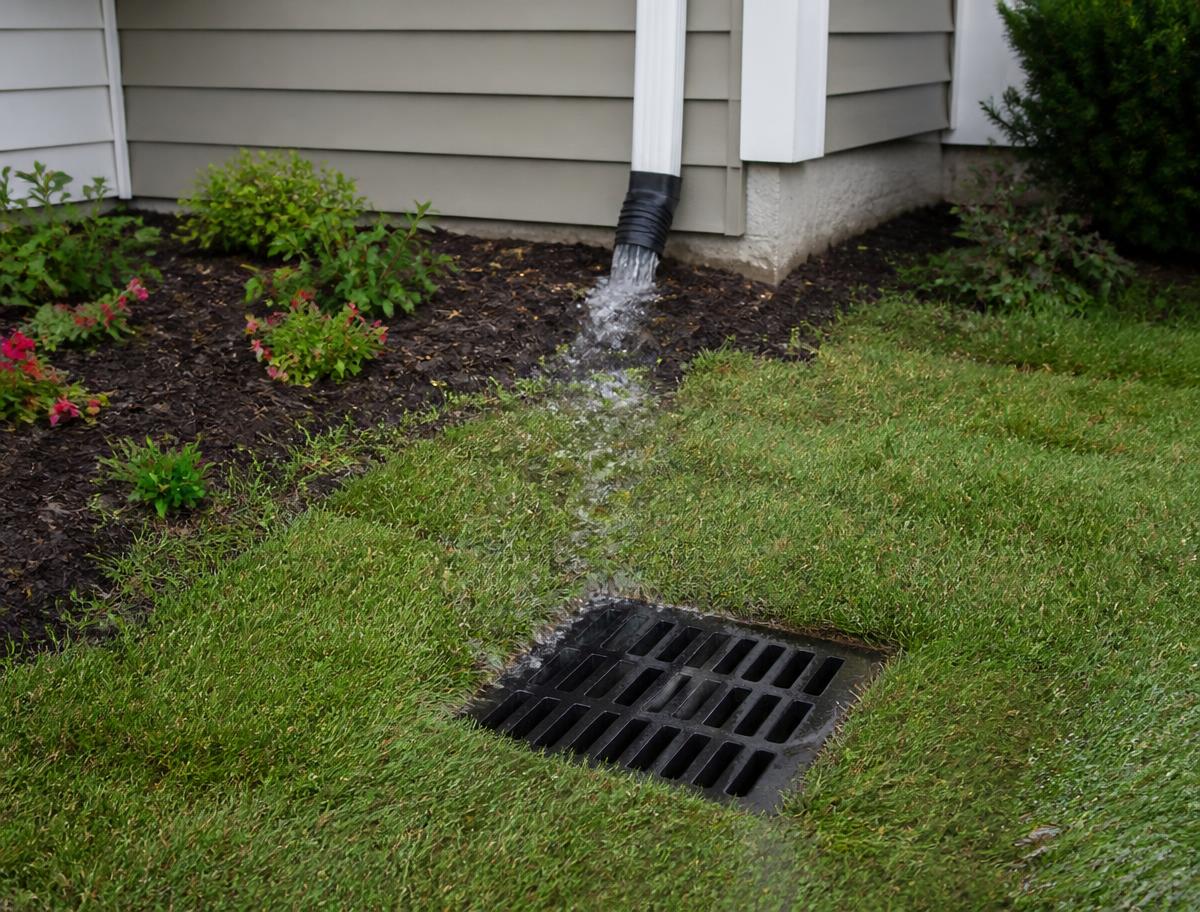
Drainage system repair covers everything downstream of the original installation: silted pipe, crushed lines, sunken or broken basins, disconnected joints, root intrusion, buried outlets and systems that never had enough fall to begin with.
Repair work is diagnostic first. Excavating the wrong section is expensive and unnecessary, so the sensible sequence is to check the outlet, test flow through the system, and isolate the failure before opening any ground.
Signs an existing drainage system has failed
- Grates that hold water instead of taking it
- An outlet that stays dry during heavy rain
- Soft or sinking ground along a known pipe route
- A basin that has settled below or heaved above grade
- Water backing up out of a cleanout or inlet
- Sediment or root mass visible in the pipe or basin
When repair rather than replacement makes sense
- The existing route and discharge point are still appropriate
- One identifiable section has failed while the rest flows
- The system was properly built and needs cleaning plus cleanouts
- Basins or grates need resetting after settlement
How drainage repair typically works
1. Locate and inspect
Inlets, cleanouts and the discharge point are located and opened. A camera may be used to inspect longer or buried runs.
2. Flow test
Water is introduced at the upstream end and followed to find where it stops or slows.
3. Clear or excavate
Sediment and roots may be jetted or cut out. Crushed, separated or collapsed sections are excavated and replaced.
4. Improve and restore
Fall is corrected, cleanouts are added, the outlet is re-established, and the surface is backfilled, compacted and restored.
Common failures on Atlanta properties
Silt loading is the region's signature failure mode. Red clay fines travel easily with runoff and settle in flat pipe sections, basins without sumps and stone envelopes without adequate filter fabric.
The second is landscape change over time — new beds, sod, walls or fill covering the discharge end. And on wooded lots, roots from mature hardwoods and pines find their way into joints and perforations.
Corrugated pipe crushed by vehicle traffic or heavy equipment near driveways and side yards is also a frequent finding.
Typical considerations
- Whether any documentation or memory of the original layout exists
- Access to the failed section under hardscape or mature planting
- Diagnosis effort, which can be a meaningful part of a small repair
- Whether the original design had adequate capacity and fall
- Cost of repeated repairs versus rebuilding the run properly
Get a free estimate for drainage repair
Submit your property details and project description through the form. No phone calls required to start.
Questions
Drainage Repair — Frequently Asked Questions
Why does my yard drain hold water instead of draining?
Usually a blockage downstream of the grate: sediment in the pipe, a collapsed section, roots, or a buried outlet. Occasionally the basin was installed with no fall to the discharge point.
Can drainage pipe be cleaned out instead of dug up?
Often yes, when the pipe itself is intact. Jetting and cutting can clear sediment and roots. Crushed or separated pipe has to be excavated.
How do I find my drainage outlet?
Look at the lowest part of the lot for a pipe end, an emitter lid or a rock apron. Outlets frequently disappear under sod, mulch or leaf accumulation over the years.
Should I repair the old system or install a new one?
If the route and discharge point are sound, repair is usually the better value. If the system lacked fall, fabric or capacity from the start, rebuilding tends to cost less over time.