Johns Creek, Georgia · Atlanta metro
Yard Drainage Solutions in Johns Creek, GA
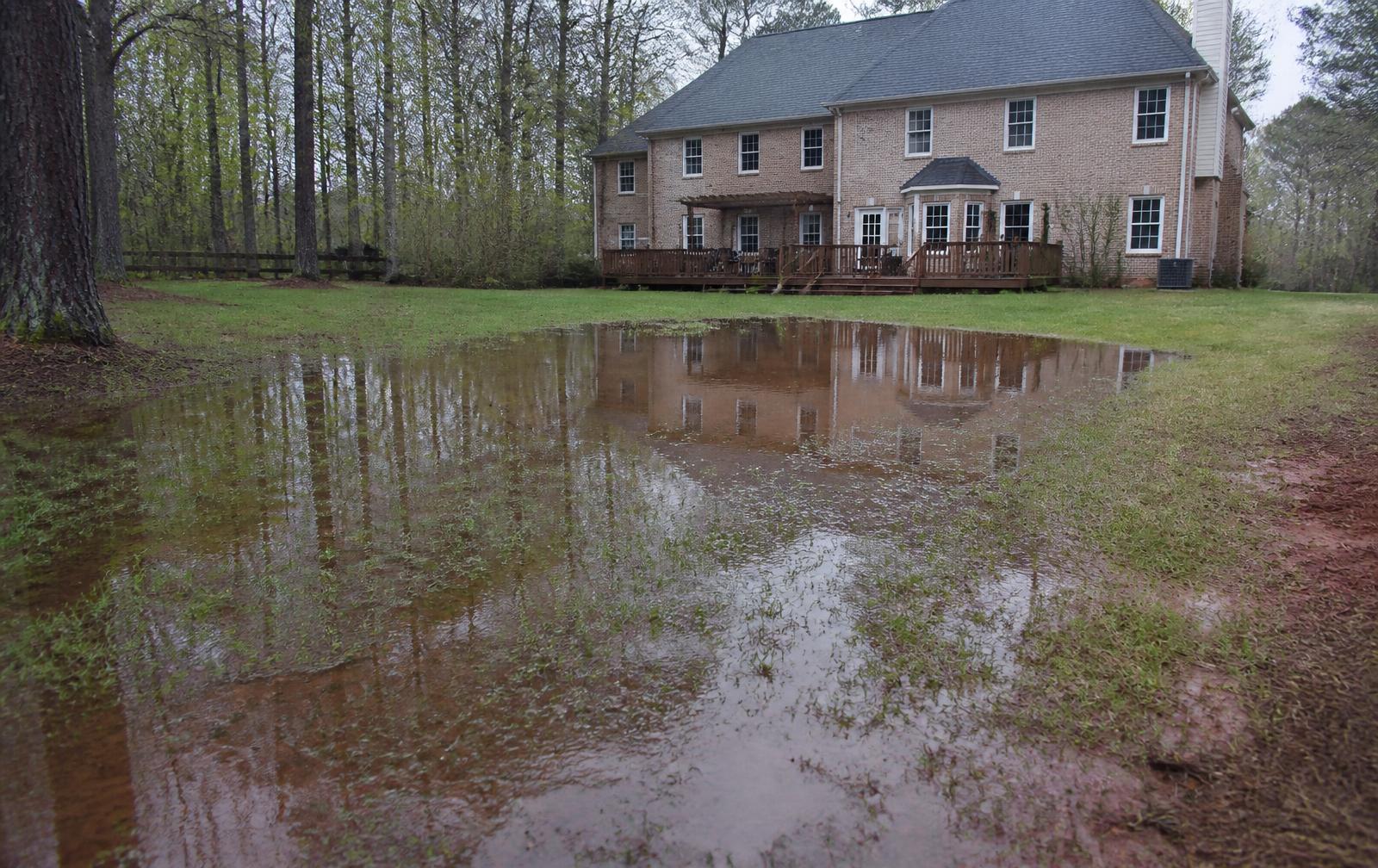
Johns Creek yards are mostly graded subdivision lots — well-kept lawns on tightly compacted clay, which is a combination that holds water.
Johns Creek developed largely between the late 1980s and the 2000s along the Chattahoochee in northeast Fulton County. Neighborhoods off Medlock Bridge, State Bridge and Jones Bridge are typically planned subdivisions with engineered grading, curb-and-gutter streets and detention infrastructure.
The result is a lot of homes with attractive lawns sitting on soil that was heavily worked during construction. Drainage complaints are less about dramatic slope and more about lawns that stay soft, low areas that hold water and rear yards backing to common areas that receive runoff from several properties.
Subdivision grading and clay
Terrain is moderately rolling and generally falls toward the river and its tributaries. Within a subdivision, lot grading was designed to move water to streets and detention areas, and it usually works — until landscaping, fences, patios or additions interrupt the intended path.
Compaction is the local theme. Construction traffic on clay produces a dense subsoil that infiltrates slowly, so any depression tends to hold water rather than absorb it. Irrigation systems running on already-saturated soil can extend how long an area stays soft.
Typical Johns Creek drainage situations
Soggy lawn areas that never fully dry
Broad soft zones rather than distinct puddles usually indicate saturated soil. That is the classic case for subsurface collection combined with correcting any low pocket.
Blocked lot drainage paths
A patio, retaining wall, raised bed or fence installed across the original drainage route stops water where it never used to stop. Restoring a route through or around it solves it.
Rear lots receiving common-area runoff
Homes backing to green space or detention areas can take on flow from a wide upstream area during heavy storms.
Downspouts discharging into landscape beds
Roof water released into a bed against the house keeps the soil saturated year-round and often shows up as a persistent damp corner.
Nearby areas
Adjacent communities in northeast Fulton and south Forsyth:
- Alpharetta
- Duluth
- Suwanee
- Peachtree Corners
- Medlock Bridge
- Ocee
Not sure whether your address is covered? Submit your ZIP code through the drainage estimate form and it will be matched against professionals serving that part of the metro.
Drainage problem in Johns Creek?
Tell us where water collects, how long it stays and what you have already tried. Everything starts with the form.
Questions
Johns Creek Drainage FAQs
My lawn is soft everywhere, not just in one spot. What does that mean?
Widespread softness usually points to saturated soil rather than a single trapped puddle. Subsurface collection through the wet zone, plus removing any water source feeding it, is the typical response.
Could my irrigation system be making drainage worse?
It can contribute. Watering on a schedule that ignores recent rainfall keeps clay soil at capacity, so the next storm has nowhere to go. Adjusting the schedule is worth doing alongside any drainage work.
We added a patio and now water collects behind it. Why?
Hardscape frequently interrupts the lot's original drainage path and creates a dam. The fix is usually to restore a route around or through it, often with a channel drain at the edge or a basin tied into pipe.