French drain repair — Atlanta metro
French Drain Repair in Atlanta, GA
A drain that used to work and no longer does usually has a specific, findable failure: a blocked outlet, a silted trench, a crushed line or fall that was never right.
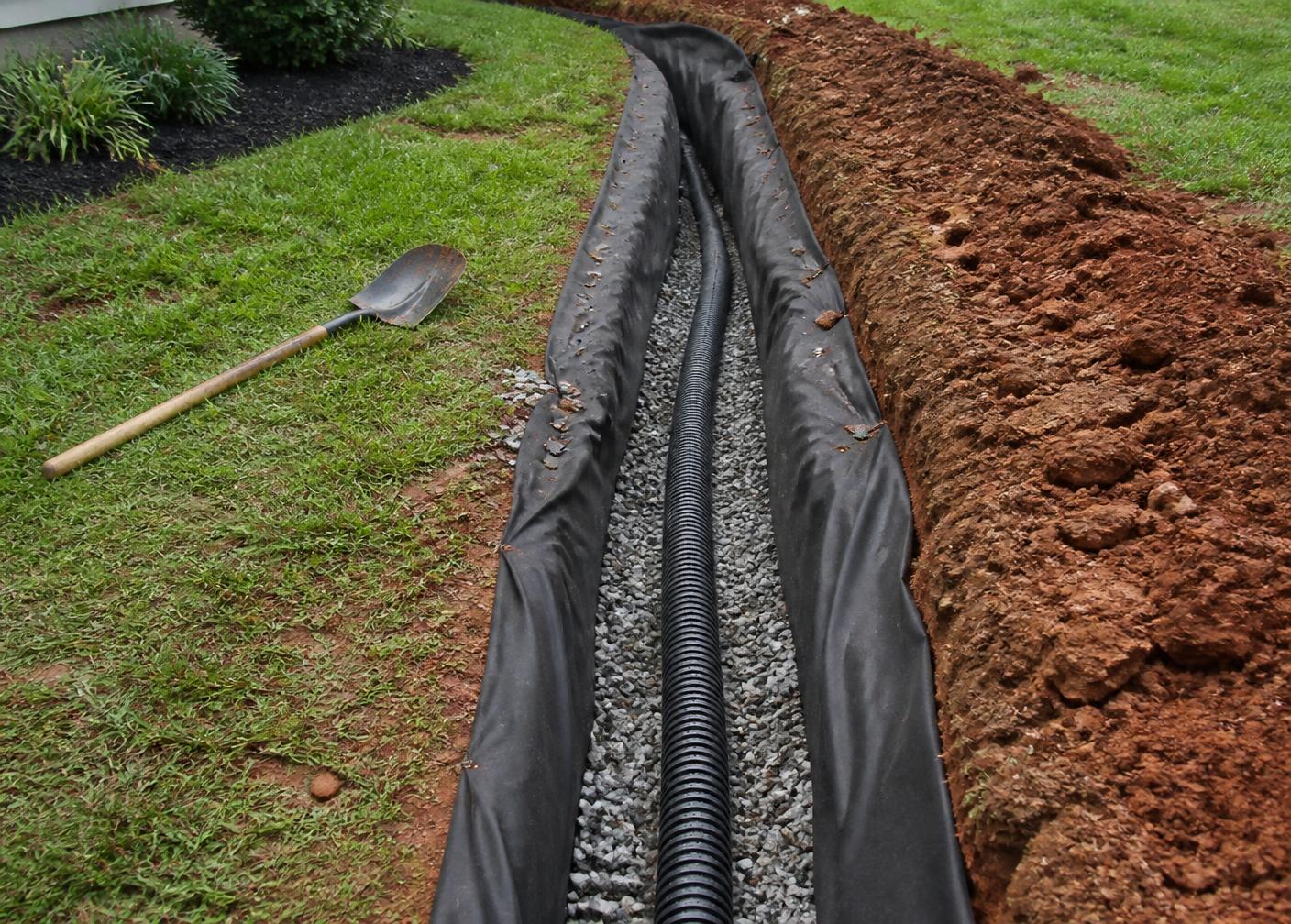
French drain repair starts with diagnosis rather than digging. The visible symptom — water standing over the trench line — can come from the outlet end, the middle of the run, or the inlet, and each has a different repair path and cost.
In the Atlanta area the most common failures are sediment intrusion in clay soil, a discharge point that has been buried by grading or landscaping, roots inside the pipe, and lines that were installed with too little fall to self-clean.
Signs an existing French drain has failed
- Water ponding directly above the trench line during and after rain
- The outlet or pop-up emitter no longer releases water in a storm
- Grate or inlet backs up and overflows instead of draining
- Soft, settling ground along the pipe run
- Silt, mud or root mass visible at the discharge end
- The drain works briefly, then quits partway through a rain event
When repair is the right call
- The overall route and outlet are still viable and only part of the line is compromised
- The failure is a blocked or buried discharge point
- Pipe is intact but full of sediment and can be cleared and given cleanouts
- A single crushed or disconnected section can be excavated and replaced
How French drain repair typically works
1. Find the outlet
The discharge end is located and cleared first. A surprising share of 'failed' drains are simply outlets buried under mulch, sod or fill.
2. Test the line
Water is introduced at the inlet and tracked through the system to isolate where flow stops. Camera inspection may be used on longer runs.
3. Clear or expose
Sediment and roots can sometimes be flushed or cut out. Where the pipe is crushed, offset or clogged solid, that section is excavated.
4. Rebuild the weak point
Damaged pipe, degraded fabric and silted stone are replaced, fall is corrected, and cleanouts are added so the line can be maintained instead of re-dug.
Why drains fail here
Clay fines are the usual culprit. When a trench was built with unwashed stone or without appropriate filter fabric, silt fills the voids and the pipe loses its ability to collect and carry water.
The second common cause is landscape change. Beds get expanded, sod gets laid, a retaining wall goes in, and the pop-up emitter that used to release water ends up covered. Storm water then backs up along a line that is otherwise fine.
Typical considerations
- Age and construction method of the original system, when known
- Whether cleanouts exist — their absence usually means excavation to diagnose
- Accessibility of the trench line under patios, walls or mature landscaping
- Whether original fall is adequate or the route needs to change
- Cost comparison between spot repair and full replacement
Get a free estimate for french drain repair
Submit your property details and project description through the form. No phone calls required to start.
Questions
French Drain Repair — Frequently Asked Questions
Can a clogged French drain be flushed instead of replaced?
Sometimes. Lines with intact pipe and light sediment can often be jetted or flushed and then fitted with cleanouts. A trench whose stone envelope is packed with clay fines usually needs rebuilding, because the blockage is outside the pipe.
How do I know whether the problem is the pipe or the outlet?
A simple test is to run water into the inlet and watch the discharge point. If nothing arrives and the outlet is clear and open, the blockage is somewhere in the run.
Is a failed French drain worth repairing at all?
If the original route and outlet were sensible, repair is often the economical option. If the drain was installed without fall, without fabric, or with no viable discharge point, rebuilding is usually the better investment.
Do tree roots really get into drainage pipe?
Yes. Roots seek moisture and can enter perforations and joints, especially near mature hardwoods. Root intrusion is a common finding on older Atlanta-area yard drains.